


ITOPF Workshop Held: Tabletop Exercise Simulating Alternative Fuel and Hazardous Substance Incidents
Prior to the seminar co-hosted by the Association and ITOPF on 6 October 2026, an internal workshop titled “Role of ITOPF & Hydro Nexus Tabletop Exercise” was conducted by ITOPF. The workshop was attended by staff from the Claims Department, as well as surveyors and representatives from salvage companies.
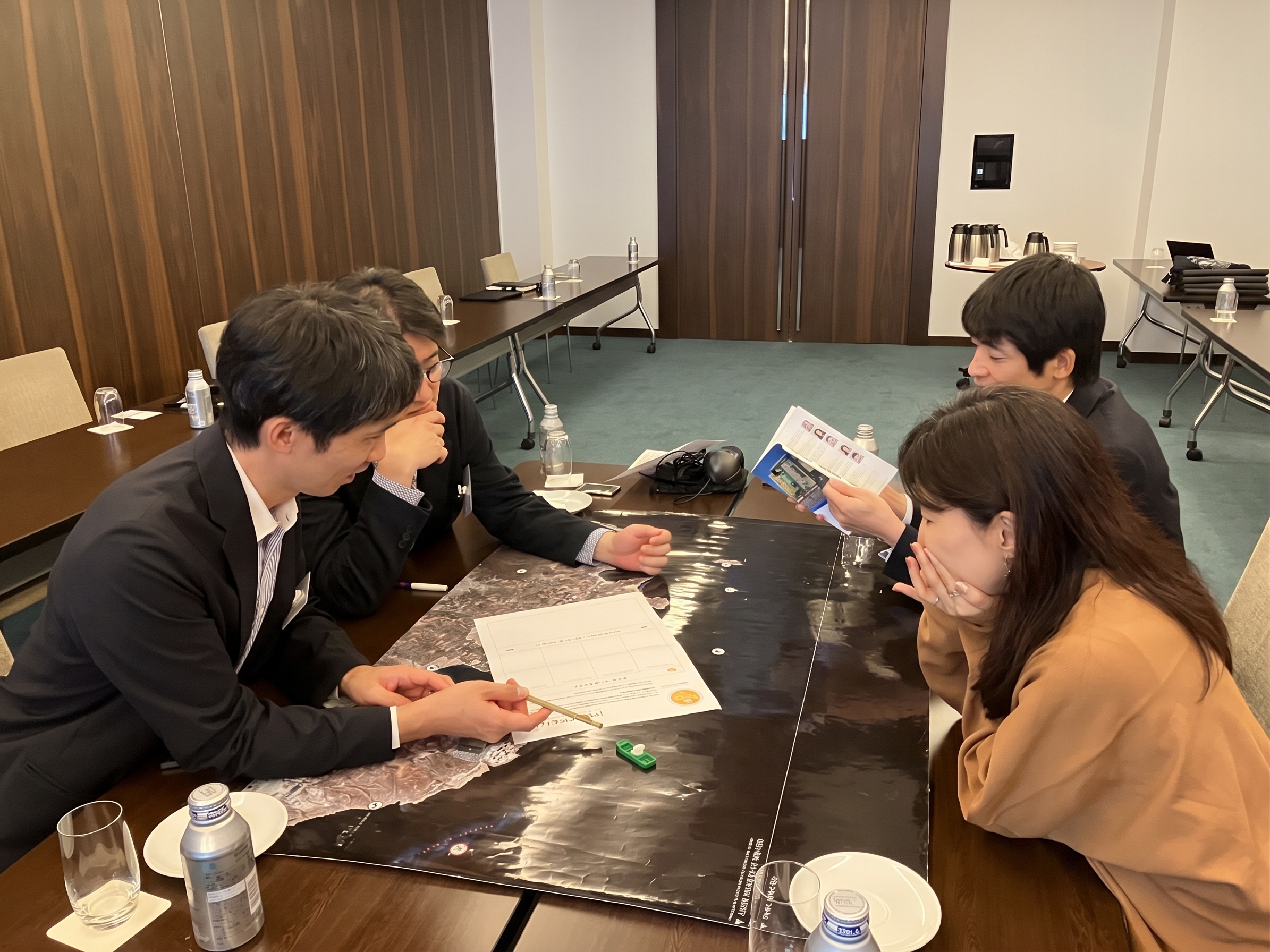
Participants were divided into three groups to discuss a hypothetical incident involving a collision between an LNG-fuelled container ship and a tanker carrying nitric acid, resulting in the spill of both substances into the sea. Assuming the roles of local authority officials, participants examined specific incident response procedures and challenges while referring to a map indicating the locations of the vessels.
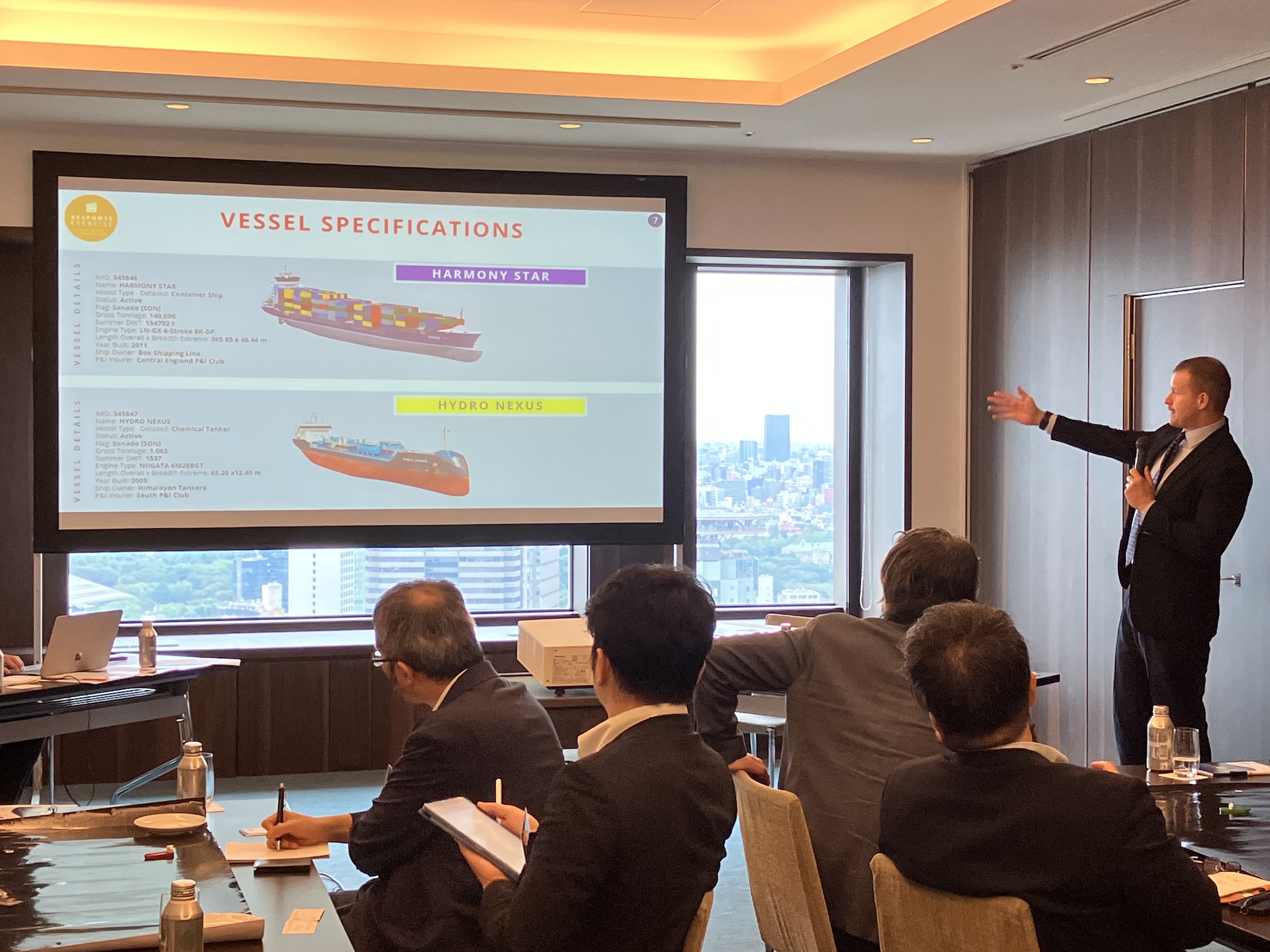
The exercise was highly practical, incorporating detailed scenarios such as the distance from the port and the dimensions of each vessel, as well as complex conditions including potentially flammable conditions and the presence of injured personnel.
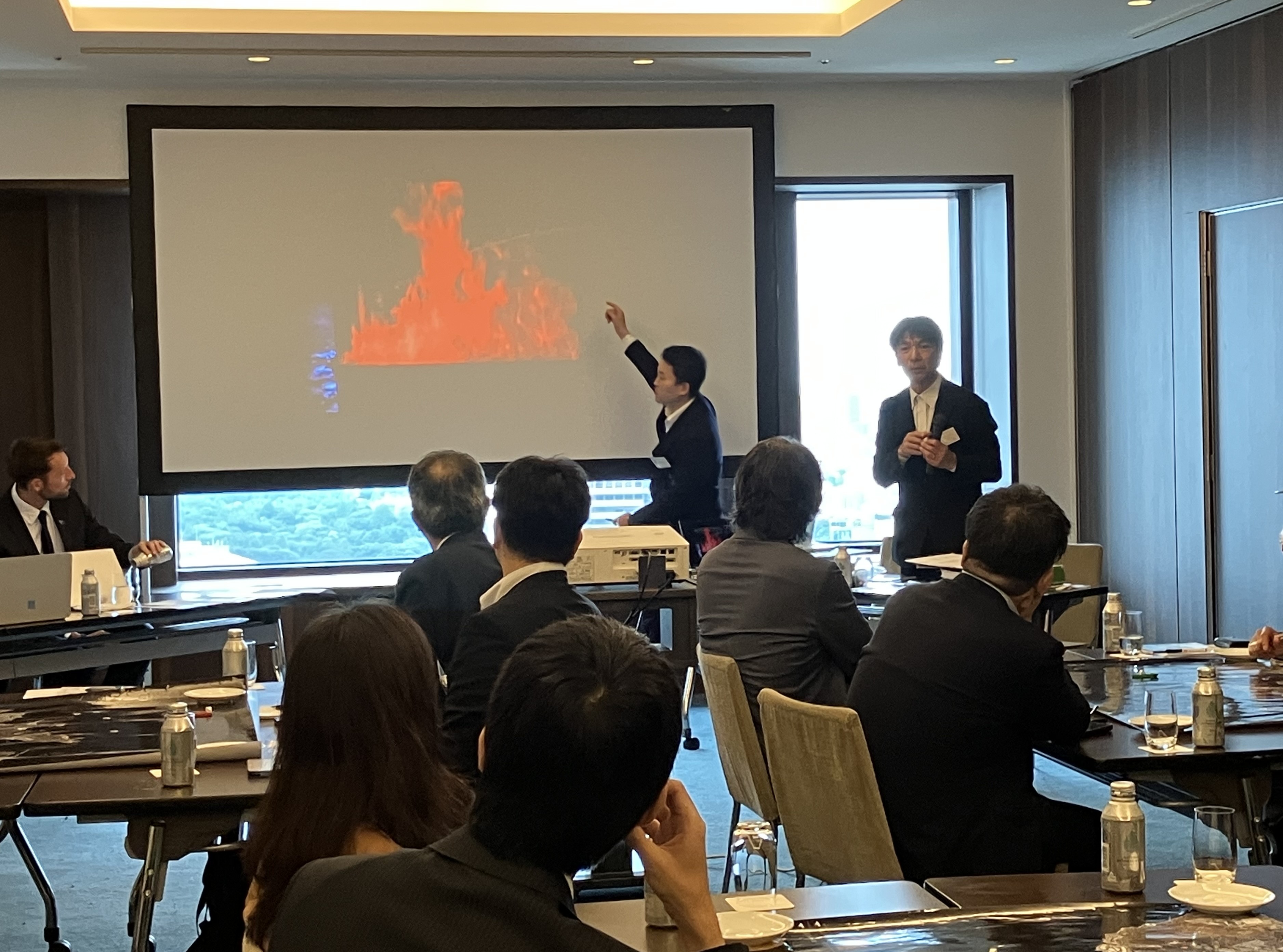 Furthermore, a representative from the Maritime Disaster Prevention Center (MDPC) shared video footage of a methanol fire extinguishing experiment, providing a valuable opportunity for exchanging information on the latest technologies and knowledge.
Takeo Saito, Chief Specialist in Claims DepartmentⅠ, who participated in the workshop, summarised the event as follows: “Unlike conventional fuels, alternative fuels such as LNG carry unique risks, including the fact that spills are difficult to identify visually. Carelessly approaching such spills is extremely hazardous, therefore it is essential to accurately understand the properties of the substances and carry out precise monitoring based on advanced expertise. Through this practical workshop, we have further deepened our knowledge and reaffirmed that close cooperation with specialised organisations such as ITOPF and the MDPC is more crucial than ever.”
The Association will continue to strengthen its collaboration with specialised bodies to serve as a robust foundation for responding effectively to increasingly complex maritime incidents. By continually integrating the latest knowledge and information through such training initiatives, we remain committed to supporting the safe operation of our Members’ vessels.